
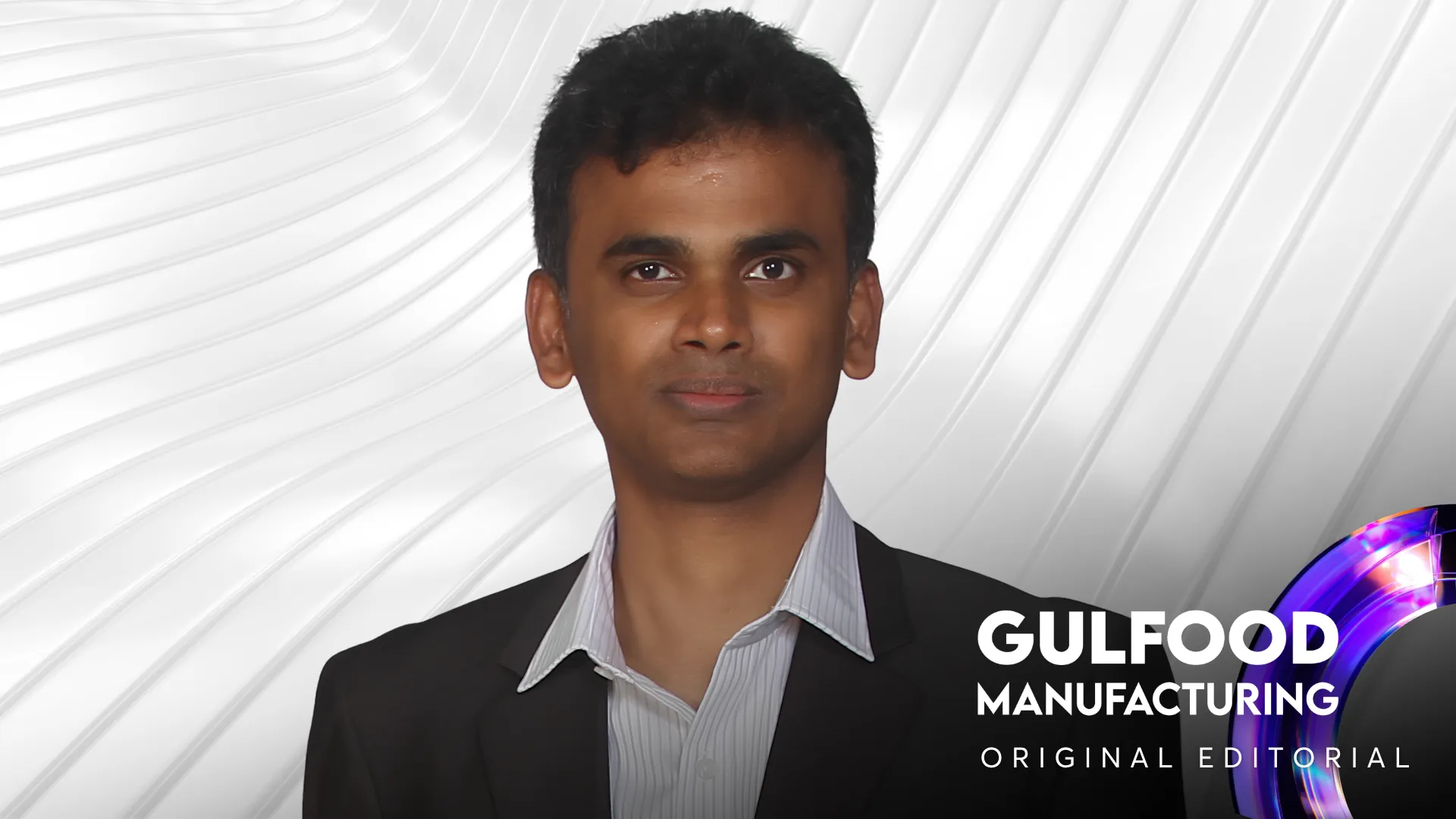
Ahead of Gulfood Manufacturing 2026, Intralox’s Vijay Injeti argues that food security is not a supply chain problem but a safety standard, and the industry has yet to agree on what that standard should be.
Every conversation about food security eventually circles back to a simpler question: is the food actually safe to eat. Intralox, a global manufacturer of conveyor belting and material handling solutions for food processing lines, has built its business around exactly that question. Ahead of Gulfood Manufacturing 2026, Vijay Injeti, Head of Sales and Business Development across Asia Pacific, the Middle East and Africa, spoke about why safety sits at the root of resilience, how automation is reshaping processing floors and what predictive maintenance means for an industry racing to keep up with demand.
Food Safety Is Where Resilience Begins
For Injeti, there is no separating food security from food safety. “Food security and resilience begin with food safety,” he says. “The ability to consistently produce safe, high-quality food efficiently is fundamental to ensuring affordable products reach consumers reliably.”
That challenge is growing sharper as demand rises across the Middle East and Africa, pushing processors to expand output while holding the line on quality. Injeti has seen the unevenness in standards firsthand while travelling through the region, noting that “food safety standards vary from market to market” and describing a clear opening for greater standardisation across the industry.
That push towards consistency matters more each year as the processing sector matures and increasingly supplies global brands with strict quality demands. “Consistent, predictable product quality is no longer just a competitive advantage, it’s becoming a business necessity,” he explains. For Injeti, resilience ultimately comes down to building operations that can deliver safe, high-quality products at scale while cutting waste and lifting efficiency.
Automation As An Answer To Shifting Demands
Manufacturers today are pulled in several directions at once, managing food safety, workforce availability, efficiency and rising consumer demand all together. Injeti says the solutions that help most are the ones that improve consistency and flexibility without putting quality or safety at risk.
End of line automation has become a particular focus. Beyond cutting down manual handling, Injeti points out that automation “gives manufacturers greater flexibility to adapt as market requirements evolve.” Pack sizes, product mixes and throughput targets shift constantly, and processors need systems built to move with those changes rather than against them. The manufacturers positioned to grow, he says, are the ones investing in technology that lets them scale without loosening their grip on safety, quality or operational standards.
What Intralox Wants From Gulfood Manufacturing
Injeti describes Gulfood Manufacturing as one of the most significant gatherings the global food industry has, bringing processors, technology providers, OEM partners and industry experts together under one roof. For him, the real value lies in listening. “What I value most about the event is the opportunity to learn directly from customers and partners about the challenges they are facing in their facilities right now,” he says, adding that many of the industry’s strongest innovations come from solving exactly those kinds of operational problems.
With food production needs continuing to climb across MENA and the wider African continent, Injeti sees real opportunity for the industry to work together on safety, quality, automation and resilience, and views events like this one as a place where that collaboration can take shape.
Where The Market Is Heading
Food safety and product quality remain top priorities as production volumes rise across the Middle East and Africa, and manufacturers are searching for ways to scale without losing the consistency that consumers and global brands expect.
Injeti points to a handful of shifts driving that search. Investment in hygienically designed equipment is growing, helping manufacturers hold onto food safety and quality standards even as output increases. Automation continues to build momentum as a way to improve efficiency, reduce variability and lift throughput. Predictive maintenance is also gaining ground, helping manufacturers catch potential issues before they cause downtime, a factor Injeti calls critical given how much unscheduled stoppages can disrupt production schedules and push operations towards round-the-clock reliability.
Taken together, Injeti sees an industry increasingly focused on solutions that bring food safety, operational reliability and scalability into the same conversation, all while working to cut waste and strengthen supply chain performance. As he puts it: “Food security starts with food safety. As food production scales to meet demand across the Middle East and Africa, success will depend on one thing: delivering safe, high-quality food, consistently.”
Q&A with Vijay Injeti, Head of Sales and Business Development, Asia Pacific, Middle East and Africa, Intralox
What do food security and resilience mean for your business this year?
Food security and resilience begin with food safety. The ability to consistently produce safe, high-quality food efficiently is fundamental to ensuring affordable products reach consumers reliably. As food demand continues to grow across the Middle East and Africa, processors are under increasing pressure to expand production while maintaining the highest standards of food safety and quality. Standardisation becomes even more important as the food processing sector continues to mature, with many manufacturers supplying large global brands that have rigorous quality requirements.
How are you navigating current industry challenges?
Food manufacturers today are balancing food safety, workforce availability, operational efficiency and the need to meet growing consumer demand. One area we see gaining significant attention is end of line automation. Beyond reducing manual handling and improving efficiency, automation gives manufacturers greater flexibility to adapt as market requirements evolve. The manufacturers best positioned for growth are those investing in technologies that help them scale efficiently while maintaining high safety, quality and operational standards.
What are you looking forward to at Gulfood Manufacturing 2026?
Gulfood Manufacturing is one of the most important global platforms for the food industry, connecting processors, technology providers, OEM partners and industry experts shaping the future of food production across the Middle East, North Africa and the larger African continent. What I value most about the event is the opportunity to learn directly from customers and partners about the challenges they are facing in their facilities right now.
What key market trends are you seeing?
Food safety and product quality remain among the highest priorities in the food industry, particularly as production volumes continue to increase across the Middle East and Africa. We’re seeing more investment in hygienically designed equipment, growing momentum behind automation and increasing adoption of predictive maintenance strategies. Overall, manufacturers are increasingly focused on solutions that combine food safety, operational reliability and scalability while reducing waste and improving supply chain performance.


