RONDO’s Martin Zimmermann on the quiet mathematics of dough and why precision is the real waste-fighter.
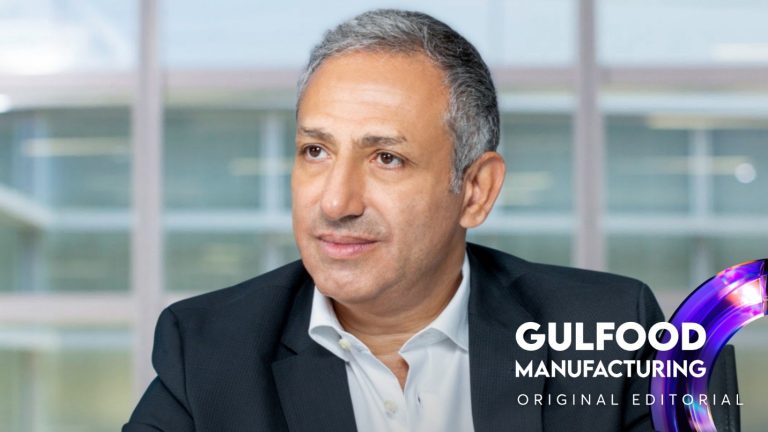
Ask most people what threatens food security and they’ll picture something dramatic: a blocked shipping lane, a failed harvest, a border closed overnight. Rarely do they picture a slightly uneven sheet of dough. But for RONDO, a Swiss manufacturer of dough handling and shaping systems for bakeries and industrial food producers, that unevenness is exactly where the problem starts. A batch that varies by even a few grams per unit compounds fast at industrial scale: more flour bought than needed, more product trimmed or binned, more energy spent baking loaves that don’t meet spec. Ahead of Gulfood Manufacturing 2026, Martin Zimmermann, Area Sales Manager at RONDO in Burgdorf, Switzerland, explained why the company sees precision not as a manufacturing nicety but as one of the more overlooked levers in food security, and why, after a run of geopolitical turbulence, he’s simply glad to be back in a room with customers again.
Consistency Is Where Waste Gets Cut
For Zimmermann, food security starts with something deceptively simple: getting the same result every single time. “Consistent food quality and reduced waste, precision dough handling and shaping systems produce uniform products, improving yield and minimising ingredient losses,” he explains.
It’s worth sitting with why that matters. Bread and pastry production is, at its core, a raw materials game: flour, yeast, water and fat, and margins in bakery manufacturing are often thin enough that a percentage point of ingredient waste is the difference between a profitable batch and a break-even one. Uniformity isn’t just about how a croissant looks on a shelf. It’s about whether a factory can predict, batch after batch, exactly how much flour it will need to hit its output target. That predictability, Zimmermann argues, is what supports more efficient use of flour and other raw materials from the very first stage of production, long before a loaf or pastry takes shape. Which means the resilience RONDO is selling isn’t downstream, in packaging or logistics, but upstream, at the point where waste is cheapest to prevent.
Staying Ahead Through Constant Evolution
Asked how RONDO is navigating pressure across the wider industry, Zimmermann doesn’t point to a single innovation or product launch. Instead he describes something closer to a discipline: “We constantly evolving our product portfolio with a focus to the user experience and enable it to achieve 100% OEE,” he says, referring to overall equipment effectiveness, the industry’s shorthand for how much of a machine’s theoretical output a factory actually captures once you account for downtime, slow cycles and quality rejects.
Chasing 100% OEE is, in practice, chasing a moving target. Most bakery lines run well below it, and every percentage point clawed back represents hours of production that would otherwise have been lost to changeovers, jams or defective product. Framing the goal this starkly says something about where RONDO sees the real competitive ground: not in adding features, but in closing the gap between what a machine can theoretically do and what it actually delivers, shift after shift.
Why RONDO Still Values Face To Face Conversation
Zimmermann is candid about what the team is most looking forward to at this year’s show: simply being back in the room with the people they work with. “The whole RONDO team is looking forward to welcome all visitors to our booth, after months of political uncertainties,” he says, a line that lands with more weight than a standard trade show pleasantry once you consider what the past year has looked like for cross-border industrial trade. Tariff shifts, shipping disruptions and general geopolitical noise have made the kind of long-range planning bakery manufacturers rely on considerably harder, and for a Swiss company selling precision equipment into markets across the Middle East and beyond, uncertainty upstream, in trade policy, becomes uncertainty downstream, in whether a customer can commit to a capital purchase at all.
Against that backdrop, Zimmermann’s insistence that nothing replaces direct conversation reads less like nostalgia and more like strategy. “Despite all electronic communication tools, face-to-face discussions with our customers and partners are irreplaceable and we really value personal interaction,” he says. In a business where a production line represents a years long commitment, trust built across a table still does work that a spec sheet can’t.
Automation And Speed Define The Market
Looking at where the industry is heading, Zimmermann sees two forces converging rather than competing. Automation continues to accelerate, driven by the same labour constraints reshaping food manufacturing globally, but it’s paired with a second, faster moving pressure: the need to react quickly when consumer tastes shift. “The need to react fast to new food trends is becoming essential for our customers,” he says.
That’s a harder combination to deliver than it sounds. Automated lines are, by design, built for consistency and volume, the two things a sudden flavour trend or viral product tends to disrupt. RONDO’s answer is to build flexibility into that consistency itself, whether through developing its own recipes to hand to customers or through training that helps bakeries explore what their existing equipment can actually do once pushed. It’s a quiet acknowledgment that in a market where trends move faster than capital cycles, the real competitive advantage isn’t just having the machine. It’s knowing how far you can stretch it.