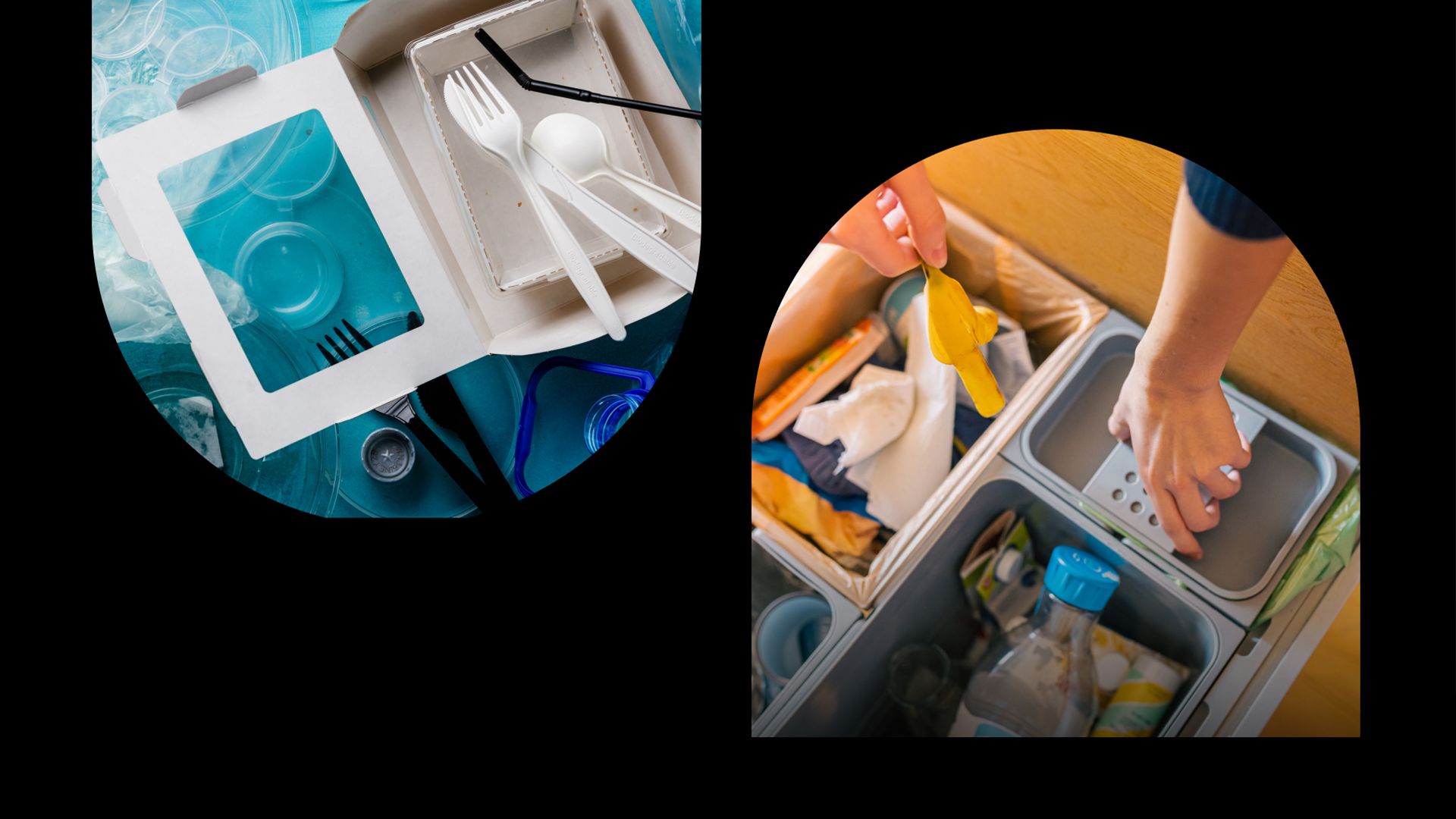
On salad bowls, sandwich wrappers, takeaway coffee cups, and other to-go food packaging, the swirling arrows of the recycling symbol hint at a reassuring future – one in which discarded packaging loops neatly back into use.
In practice, that loop rarely closes. Globally, around 85% of single-use plastic food and beverage containers become litter or end up in landfill. Once they’ve entered the environment, these plastics can fragment into tiny particles that persist for decades.
A change in consumer habits – such as using reusable coffee cups – and retailer practices, like reducing over-packaging of food, can help, but when reduce or reuse isn’t an option, material design can further minimise the impact. Some brands are starting to turn to paper as an alternative packaging; and the companies that design and manufacture the packaging are rethinking what happens after use.