

Camel milk is both deeply rooted in Saudi heritage and increasingly relevant to modern, health-conscious consumers. Traditionally valued for its nutritional profile and immunity-related benefits, camel milk is now emerging as a premium dairy segment with growing demand across the Middle East. The new NOUG Camel UHT Milk from Sawani, part of the MILAF Global Food Company, is produced and co-packaged in Saudi Arabia by United National Dairy Co. The launch represents the first camel milk in aseptic packaging from SIG.
Category: News
Döhler brings Superbrewed’s postbiotic protein into commercial production

Ingredients giant Döhler has started commercial production in Europe of “SB1,” a high-protein postbiotic ingredient from biomass fermentation startup Superbrewed Food that will support product launches in the US this year.
Döhler Ventures has also invested an undisclosed sum into Superbrewed and will work with the startup to expand production capacity and advance broader commercialization in 2027.
With a neutral taste and color, strong pH and heat stability, and good emulsification properties, SB1—labeled ‘postbiotic cultured protein’ in the US—is a non-GMO bacterium containing 88%+ protein, with a high digestibility score and meaningful levels of B vitamins, iron, and zinc.
AngeoPro, A Sustainably Sourced Natural Yeast Protein – Angelyeast

In an era of rapid population growth and accelerating climate change, our global food systems face unprecedented challenges. The United Nations projects that the world population will reach 9.7 billion by 2050, necessitating a 70% increase in food production. As we navigate this complex landscape, one thing becomes clear: our approach to protein production must evolve.
AngeoPro™ Yeast Protein is a groundbreaking vegan protein derived from the fermentation of Baker’s Yeast(Saccharomyces cerevisiae), setting a new standard in high-quality nutrition and sustainability.
New Index Reveals Gaps in Global Food System Resilience and How to Close Them

LONDON, March 17, 2026 — As global food systems face the challenge of feeding ten billion people by 2050, new data from Economist Impact’s inaugural Resilient Food Systems Index (RFSI) offers a clear roadmap to build stronger, more shock-resistant systems.
The Index ranks 60 countries across four pillars, finding a striking 42-point gap between Portugal and the Congo (Dem. Rep.), the most and least resilient food systems. While no country is fully resilient, nearly half of countries fall into the “middle zone” with average scores of 56 to 71 on a 100-point scale, signaling significant potential to strengthen system-wide resilience.
Smart Services: The motor of innovation for future-proof production

Smart Services: The key to less downtime and more productivity
Digital services, such as for example MULTIVAC Smart Services, are intelligent resources which, by analysing “smart data” and using machine networking, are precisely tailored to the individual needs of a manufacturing company. By automating centralised processes, it is possible to increase machine availability and elevate the entire production performance. For example, machines with integrated IoT sensors can be monitored continuously, so that any anomalies, such as discrepancies in operating pressure or temperature, can be detected early and rectified quickly in a targeted way. The requirement for personnel is also reduced at the same time, since routine tasks such as status checks or simple calibration can be undertaken by “smart systems”.
Smart Services also make it possible to adapt production to changing requirements. This ease of scaling-up can be seen particularly clearly, if production capacity has to be expanded rapidly. By using an integrated Smart Services panel for networking, it is possible to link new machines into the existing infrastructure, without having to make time-consuming adaptations to the system. A food manufacturer can for example integrate an additional packing station at short notice into his packaging line, so that he can react quickly to a rise in demand.
Data collected from sensors on all the company’s machines provides a solid basis for accurate production planning: Key performance indicators and daily production targets can be viewed in real time, while operating data such as machine output and pack quality can also be continuously analysed. If any discrepancies arise, for example a sudden increase in rejected products, counter-measures can be introduced quickly. Operation that is optimised in this way means lower energy consumption and less use of resources.
By integrating Smart Services into everyday working, it is also possible to make it easier for new or unskilled employees to operate the machines. Digital platforms and intuitive user interfaces enable operators to develop a better understanding of the operation of machines and lines. Access to real-time data about the machine status and performance promotes greater confidence and safety, when dealing with technology. Even new employees can quickly make decisions on their own, such as for example about the planning of maintenance work.
Preventive maintenance in the era of Smart Services
Preventive maintenance, also known as “predictive maintenance”, is one of the most important strengths of Smart Services. The objective is to identify and eliminate potential problems on machines, before it gets to costly breakdowns or emergency repairs. To do this, “smart systems” continuously analyse the machine data in order to detect signs of wear, overload or other risks at an early stage. This data-based support helps to not only ensure, that the machine operates more efficiently and cost-effectively, but also to plan maintenance work more precisely.
This means that, thanks to Smart Services, production teams benefit from customer service that is more individual, faster and higher-quality. Thanks to the machine’s connection to the cloud, the machine manufacturer’s service technicians are constantly “up to speed” on the pending maintenance work, and they can warn their customers in advance about any machine breakdowns that may be threatening. In addition to preventing emergencies, such “smart systems” also reduce the work involved in maintenance planning. The necessary maintenance stages, which previously had to be looked up in instruction manuals, can today be provided digitally and automatically, and they can even be carried out with the virtual support of a remote service technician if required. Not only is time saved, but the quality of the maintenance is increased.
Smart Services, smart introduction: Underlying conditions for implementation
Where can companies make a start, when introducing Smart Services into their production lines? The introduction requires comprehensive preparation in all aspects of technology, security and organisation. Since Smart Services complement the existing “system landscape” instead of replacing it, they represent a simple digitalisation exercise, even for companies with established processes. Companies need to change relatively little in their data management in order to be able to use the benefits of Smart Services. When embarking on the introduction, it is recommended that one starts with a line, where a breakdown would have significant effects on the entire production. Only in this way can the benefits of Smart Services unfold in full from the beginning.
Connection to the cloud is a central requirement for the use of Smart Services. Depending on the particular application, companies can opt for edge computing, if low-latency evaluation or pre-processing of the data is necessary, or they can process the collected data in the cloud, for example if the analysis is more extensive, or if real-time support by the machine manufacturer is required. By implementing strict access controls and encryption, it is possible to make sure that only authorised parties can gain access to this data.
But the potential danger of cyber attacks also increases, when machines and production systems are networked in this way. Companies should take these threats very seriously and regularly install security updates and patches provided by machine manufacturers. In order to ensure this, machines should always be kept online, and not isolated offline for reasons of perceived protection – only in this way can security gaps be closed permanently. Companies should also keep their production network separate from their main network, as well as connecting the machines to the cloud separately from each other. This provides fewer opportunities for large-scale cyber attacks.
Overall there is a need for strategic planning, when introducing Smart Services to a company. Successful introduction requires a clear vision, which should be laid down and supported by the company management, particularly the CTO. In addition to the Procurement and IT Security departments, it is also essential to involve the Heads of the Technical departments, the line supervisors and operators, as well as the production managers, in the critical decision-making process about Smart Services.
Arabian Mills company & Bühler drive strategic expansion across Saudi Arabia

Bühler is pleased to announce the signing of new contracts with Arabian Mills to support their strategic expansion projects in Riyadh and Hail, Kingdom of Saudi Arabia.
These contracts cover the supply of advanced flour and feed milling projects —reinforcing Bühler’s commitment to delivering high-performance, reliable, and sustainable solutions across the food and feed value chain.
𝐒𝐭𝐫𝐞𝐧𝐠𝐭𝐡𝐞𝐧𝐢𝐧𝐠 𝐜𝐚𝐩𝐚𝐜𝐢𝐭𝐲 𝐚𝐧𝐝 𝐜𝐚𝐩𝐚𝐛𝐢𝐥𝐢𝐭𝐲 𝐚𝐜𝐫𝐨𝐬𝐬 𝐤𝐞𝐲 𝐥𝐨𝐜𝐚𝐭𝐢𝐨𝐧𝐬
As demand grows and the need for resilient, efficient food systems increases, investing in modern milling infrastructure becomes a critical enabler for long-term competitiveness and national food security. The new projects with Arabian Mills Company represent an important step in expanding production capacity while strengthening operational performance through modern engineering and process technologies—designed to support resource efficiency and sustainable operations.
How Manufacturer Bühler is Defying Global Market Challenges

Plant equipment manufacturer Bühler advances sustainability and innovation across food and materials sectors despite challenging global market conditions
Swiss plant equipment manufacturer Bühler has built its business around the production of solutions for the food and advanced materials industries.
The company operates across more than 140 countries and drives innovation in sectors including animal feed, confectionery, cosmetics and electronics.
Its newly published 2025 Annual Report, Multiplying Impact Together, details the company’s progress in advancing performance, profitability and sustainability throughout the year.
Navigating global market challenges
Throughout 2025, Bühler says it worked to maintain resilience and adaptability while facing global challenges, using its portfolio of products and services to create long-term value.
According to the report, the company strengthened its ecosystem through strategic investments in manufacturing, digital services, education and innovation.
Outgoing Chairman Calvin Grieder and outgoing CEO Stefan Scheiber explained that 2025 was marked by uncertainty that led to ongoing market volatility. Increasing trade barriers and a cautious investment climate shaped the global investment goods landscape, they said.
All sustainability, net zero and sustainable supply chain leaders should attend:
- Sustainability LIVE: The Net Zero Summit – QEII Centre, London, March 4-5
- Sustainability LIVE: The US Summit – Navy Pier, Chicago, April 21-22
Co-located with Procurement & Supply Chain LIVE, these events brings together CSOs, ESG leaders and senior decision-makers at a moment when sustainability, supply chains and commercial performance are increasingly interconnected.
Tickets can be booked online today for The Net Zero Summit and The US Summit. Group discounts available.
However, Bühler continued to invest throughout this period. The company’s extensive and innovative product range, combined with strong customer service and worldwide presence, enabled it to capture opportunities in growing markets and expand its market share in key business segments.
The company also progressed its AI capabilities and enhanced its digital and automation services for customer benefit. Grieder and Scheiber attributed these achievements to the company’s focus on cost discipline and productivity improvement, which helped improve profitability and the balance sheet.
Despite the challenging economic environment, Bühler’s strategic approach enabled the company to maintain operational excellence while positioning itself for future growth.
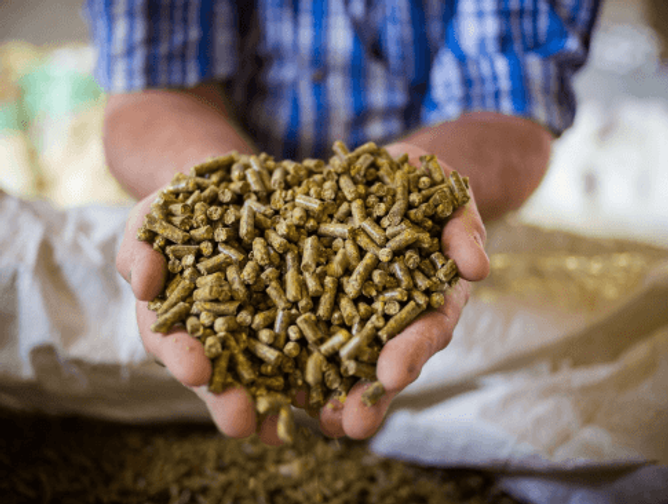
Performance across business divisions
The Annual Report outlines Bühler’s success across key sectors, demonstrating how the company positioned itself to remain in a robust financial position.
The portfolio of solutions provided the foundation for market strength in 2025, with its two business divisions reflecting their respective market dynamics.
Bühler’s Grains & Food business gained market share across several segments, while its Advanced Materials business continued to face challenges from the global slowing of automotive and battery markets.
Following two years of restrained investment in chocolate and coffee due to record-high cocoa prices, 2025 saw new investments in local cocoa processing facilities. This development allowed Bühler’s Chocolate & Coffee segment to achieve a 31% rise in order intake.
Although Advanced Materials experienced a decline in orders, Bühler secured new projects across all of its materials business areas. This sector faced significant impact in 2025 from weak investment activity in the automotive sector, uncertainties across Europe and increased competition in China.

Environmental progress and goals
In 2025, Bühler achieved a 19% reduction in energy consumption compared to its 2019 baseline. The company also recorded a 30% reduction in Scope 1 and 2 emissions over the same time frame.
A core element of the sustainability strategy involves using land-sparing technologies to work against biodiversity loss and climate change. The company aims to achieve this through building a sustainable protein supply and increasing the circularity of biomass.
With Bühler’s solutions helping to feed an estimated 2 billion people, the company is enabling its customers to reduce their environmental footprint through product use. This involves developing solutions and services that improve efficiency and yield whilst reducing energy, waste and water use.
Bühler aims to optimise the entire value chain of its offerings, from raw materials through to the end product. The company works to reduce its footprint through collaboration with suppliers, creating a roadmap to guide this work. Activities include launching engagement campaigns, collecting data on supplier emissions and targets and assessing climate monitoring progress.
Jay O’Nien, Group Sustainability Officer at Bühler, said on LinkedIn that sustainability has been a company-wide effort at Bühler for many years. “There is much to do, but we are in a strong position to support more companies to achieve their business and sustainability goals and to ensure the sustainability of our own operations,” he said.
Mondelez starts up new Toblerone manufacturing line

BERN, SWITZERLAND — Mondelez International has launched a new production line at its Toblerone chocolate production plant in Bern.
The line became operational nearly a year after Chicago-based Mondelez announced a 65 million-Swiss-franc ($83.4 million) project to create a “global Center of Excellence” at the facility, which produces about 90% of the Toblerone products sold worldwide, reaching over 120 countries.
According to Mondelez, the investment also will expand the manufacturing facilities for chocolate and nougat as well as increase capacity for mass production.
“We are incredibly proud of the new Toblerone production line, as well as the modernization in logistics and infrastructure,” said Thomas Kauffmann, manager of the Bern plant.
Mondelez described the Center of Excellence project as one of the largest investments in its chocolate production network in the last decade. The company said the investment will boost Toblerone’s production and innovation capabilities to accelerate the triangular chocolate brand’s growth in the premium market segment and meet global demand.“We have always taken pride in producing here in Switzerland,” said Iain Livingston, president of Toblerone and World Travel Retail. “The investment underlines our strong commitment to the location and is a critical milestone to reach our ambition to lead growth in premium chocolate worldwide.”
3D Food Printing Market Size to Reach New Heights by 2034, Driven by Innovation and Customization Trends

The 3D Food Printing Market is witnessing significant growth during the forecast period 2026 to 2034, supported by advancements in additive manufacturing technologies and increasing demand for customized food products. Rising focus on sustainability, waste reduction, and personalized nutrition is further accelerating market adoption across bakeries, restaurants, and residential applications. Technological improvements in materials and printing systems are enhancing efficiency, product quality, and scalability. With strong regional developments and continuous innovation, the market is expected to expand steadily, creating new opportunities for stakeholders across the global food technology ecosystem.
The Insight Partners presents a comprehensive analysis of the 3D Food Printing Market (2026-2034), highlighting market dynamics, segmentation, growth drivers, regional insights, and future opportunities. The study provides strategic intelligence for stakeholders including manufacturers, investors, technology providers, and regulatory authorities.
According to the report, the 3D Food Printing Market is projected to register a CAGR of 32% during 2026-2034, reflecting strong growth potential driven by technological innovation, sustainability initiatives, and increasing demand for customized food solutions.
Market Overview
The 3D food printing industry is evolving rapidly as food manufacturers and technology developers adopt advanced additive manufacturing techniques. The report covers historical data from 2021 to 2024, with 2025 as the base year and a forecast period extending from 2026 to 2034.
The market analysis includes detailed segmentation by ingredient, application, and technology, along with regional insights across major geographies. This structured approach enables stakeholders to understand emerging trends and identify long term growth opportunities.
Key Market Drivers
Advancements in 3D Printing Materials
Ongoing improvements in printing materials are expanding the scope of applications. Enhanced material capabilities are enabling better texture, consistency, and nutritional customization in food products. Reduced material costs are also making the technology more accessible to commercial users.
Sustainability and Waste Reduction
Sustainability is a major growth driver. 3D food printing supports minimal waste production by enabling on demand manufacturing. This aligns with global circular economy goals and helps reduce overall food waste in production and distribution processes.
Growing Demand for Personalization
Consumers increasingly seek customized food options tailored to dietary needs, health conditions, and lifestyle preferences. 3D food printing enables precise control over nutrients, ingredients, and portion sizes, supporting personalized nutrition trends.
Market Segmentation
By Ingredient
The market is segmented into:
- Dough
- Fruits and Vegetables
- Proteins
- Sauces
- Dairy Products
- Carbohydrates
These categories reflect the versatility of 3D food printing technology across different food compositions.
By Application
Key application areas include:
- Bakeries
- Restaurants
- Residential Use
The restaurant segment is expected to witness significant adoption as chefs and food innovators integrate technology to enhance presentation and efficiency.
By Technology
Major technologies analyzed include:
- Fused Deposition Modelling
- Hot Air Sintering
- Binder Jetting
- Open Source Systems
Among these, Fused Deposition Modelling is widely adopted due to its compatibility with diverse food materials.
Regional Insights
The report provides detailed geographic analysis across:
- North America
- Europe
- Asia Pacific
- South and Central America
- Middle East and Africa
North America and Europe are expected to remain leading regions due to strong technological infrastructure, research investments, and early adoption of innovative food technologies. Meanwhile, Asia Pacific is anticipated to show significant growth potential due to expanding food technology initiatives and increasing consumer awareness.
Future Trends
Integration of AI and Machine Learning
The integration of artificial intelligence and machine learning with 3D printing processes is expected to enhance design precision, optimize production quality, and reduce operational errors.
Bioprinting Applications
Advancements in bioprinting are opening new possibilities in creating food products from biological materials. This innovation may redefine food manufacturing standards in the coming years.
Hybrid Manufacturing Approaches
The combination of 3D printing with traditional manufacturing techniques is emerging as a strategic trend. Hybrid processes enhance efficiency while maintaining scalability.
Market Opportunities
The report identifies several opportunities, including:
- Expansion in commercial bakeries and hospitality sectors
- Development of space food solutions for long duration missions
- Increased adoption in healthcare nutrition programs
- Rising investment in research and development
These opportunities are expected to contribute to sustained market growth throughout the forecast period.
Competitive Landscape
The market features several prominent companies focusing on innovation and strategic collaborations. Key players include technology developers and additive manufacturing specialists working toward improving system efficiency and material compatibility.
The competitive environment is characterized by continuous product development, partnerships, and expansion strategies aimed at strengthening market presence.
Market leaders and key company profiles
· 3D Systems
· 3D Systems, Inc.
· Beehex
· byFlow
· Choc Edge
· NATURAL MACHINES
· Procusini
· Systems And Materials Research Corporation
· TNO
· Wiiboox
Report Deliverables
The study includes:
- Market size and forecasts at global, regional, and country levels
- PEST and SWOT analysis
- Competitive landscape assessment
- Growth driving factors and challenges
- Historical analysis, base year evaluation, and forecast modeling
- Excel datasets for detailed quantitative review
This comprehensive approach ensures actionable insights for strategic planning and investment decisions.
PepsiCo UK to invest £3.6m in solar power project – “one of the largest rooftop systems of its kind in the UK food manufacturing sector”
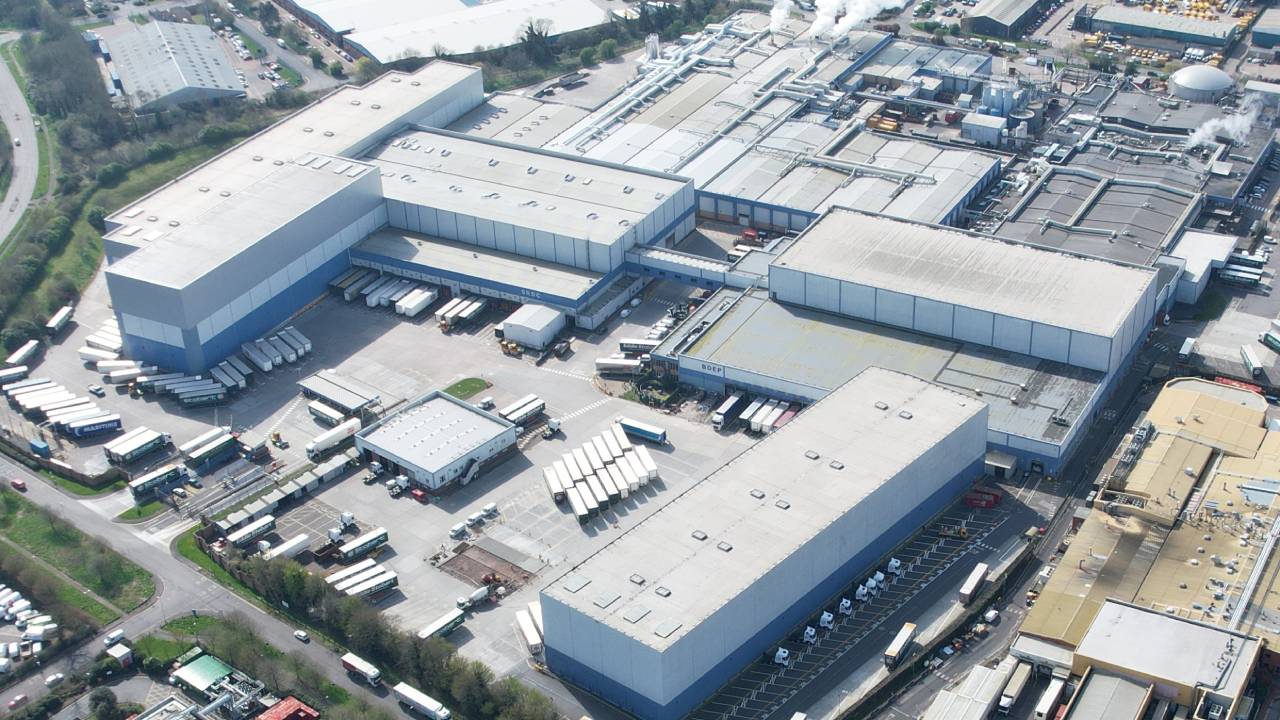
Walkers owner PepsiCo UK is making a multimillion-pound investment in a solar power project at its Southern Region Distribution Centre (SRDC) in Leicester.
Working with energy infrastructure specialist Ineco Energy, the £3.6m project will see solar panels installed across 30,000 square metres of roof space – equivalent to about four football pitches. Once complete, the panels are expected to generate 100 per cent of the energy needed to power the logistics centre over the course of a year.
The 3.56 MWp solar power system is expected to generate about 2.84 GWh of renewable electricity each year – enough to power approximately 1,000 UK homes for a year. Any surplus electricity will go towards powering the Walkers crisps manufacturing plant, one of the world’s largest crisp factories, located just next door to the distribution centre.
Andy Smethurst, UK warehousing and logistics director at PepsiCo, said: “Leicester is already home to one of the world’s largest crisp factories, and now we’re delivering one of the most complex solar power systems, right here in the East Midlands.
“It’s a major milestone for PepsiCo UK and shows how we’re continuing to find new ways to power our sites and operate more sustainably.”
The solar project is the latest in a series of sustainability investments across PepsiCo’s UK sites. In recent years, PepsiCo has switched to electric ovens at its site in Leicester, installed more efficient machinery on its manufacturing line in Coventry, and invested in more efficient fryers at its Brigg site, the home of Pipers crisps. Together, these three initiatives have reduced PepsiCo’s greenhouse gas (GHG) emissions by approximately 2,400 tonnes a year.
The £3.6m solar panel installation follows a £14m investment to upgrade the distribution centre in 2021. The distribution centre employs 240 people and distributes products made at the company’s six factories across the country.
Construction of the solar power system is already underway, with installation expected to be completed by September 2026.
Climate minister Katie White said: “We welcome PepsiCo’s decision to embrace our rooftop solar revolution in powering their Walkers crisps distribution centre in Leicester – adding extra crunch to our clean energy mission.
“It’s a great example of how businesses in Britain can cut emissions, lower bills and strengthen our energy security.”
Angus Rose, director at Ineco Energy, added: “Ineco is incredibly proud to be delivering this flagship solar project for PepsiCo. Once operational, it will be one of the largest rooftop systems of its kind in the UK food manufacturing sector, generating the same amount of electricity that the SRDC uses in a full year.
“This project has required a collaborative and highly technical approach, and we’re delighted to now be moving into the construction phase. We look forward to continuing our strong relationship with the PepsiCo team.”